 blog
blog
Best Quality T-Shirts for Men: 2026 Buying Guide
Table of Contents
- What Separates a Quality T-Shirt From a Basic One
- How to Tell if a T-Shirt Is Good Quality: 7 Checks Before You Buy
- The Best Fabric for Men's T-Shirts: Cotton, Blends, and What to Avoid
- Fit and Sizing: Matching the Cut to Your Body Type
- Durability and Wash Resistance: What 100+ Washes Reveal
- How to Care for Premium Cotton T-Shirts So They Last
- Value, Ethics, and Environmental Impact: What Your Money Supports
- Frequently Asked Questions
Last Updated: September 27, 2026
What Separates a Quality T-Shirt From a Basic One
Quality t-shirts are built from long-staple cotton, cut to hold their shape, and sewn so the neckline and seams survive years of washing. This guide from MEASURED. covers the checks, fabrics, and fits that separate a shirt worth buying from one you replace twice a year.
How to Tell if a T-Shirt Is Good Quality: 7 Checks Before You Buy
Knowing how to tell if a t-shirt is good quality comes down to seven checks you can run in under two minutes.
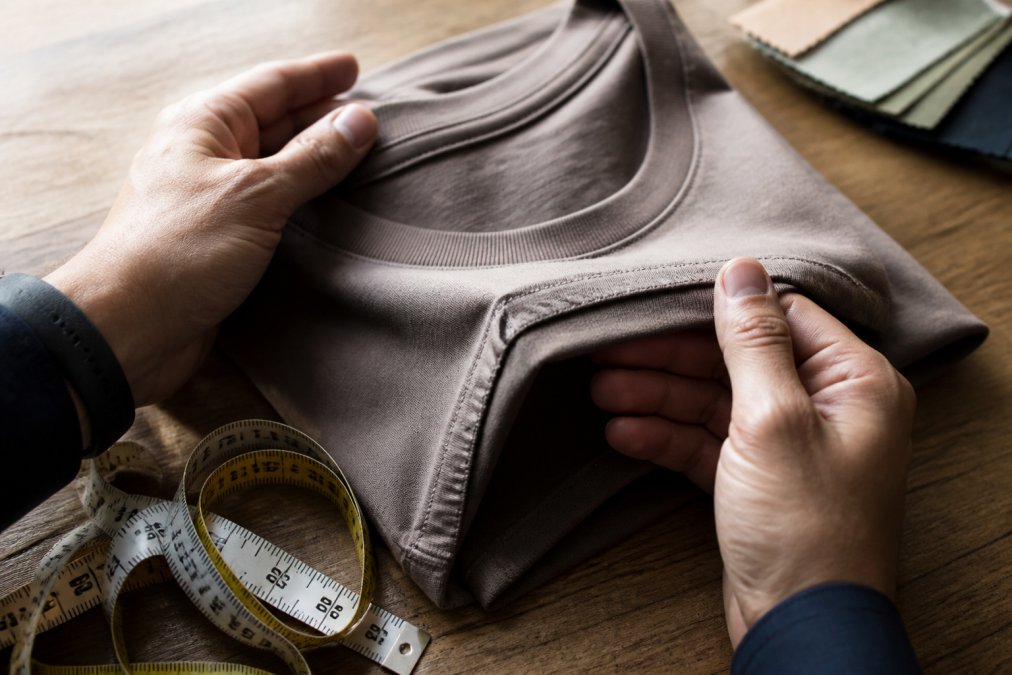
- Tug the neckline. A good collar snaps back flat. A cheap one ripples and stays rippled.
- Check the side seams. A straight, single stitch line is fine. Puckering or a wavy seam means it was sewn under tension and will twist after washing.
- Look at the hem. A double-stitched hem holds. A single row of stitching frays within a season.
- Pinch the fabric. Thick, dense cotton springs back. Thin cotton stays compressed.
- Hold it to light. Opacity tells you the fabric weight without a spec sheet.
- Stretch the shoulder seam. If it crackles or feels stiff, the fabric has been over-treated.
- Check the tag. Look for fiber content, not marketing language.
Stitching, Seams, and Neckline Integrity
Neckline integrity is the first thing to fail on a cheap shirt and the first thing people notice. Look for a ribbed collar with a taped neck seam; untaped collars curl within weeks.
Weight, Opacity, and Hand Feel
Fabric weight is measured in grams per square metre. Mid-weight shirts sit around 180-200 gsm; heavyweight runs 220 gsm and up, giving an opaque knit that drapes rather than clings.
The Best Fabric for Men's T-Shirts: Cotton, Blends, and What to Avoid
The best fabric for men's t-shirts is 100% long-staple cotton, ideally supima or combed ringspun, for breathability, softness, and color retention.
Fit and Sizing: Matching the Cut to Your Body Type
Fit has nothing to do with the size on the tag. A medium in one brand is a large in another, so shop by measurements, not letters. The matrix below tells you which cut to reach for, which to avoid, and the measurements to check.
Measure These Three Things First
Get your own numbers with a soft tape:
- Chest: around the fullest part, tape level under the arms.
- Shoulder width: from the outer edge of one shoulder bone to the other, across the back.
- Torso length: from the base of your neck to where you want the hem to sit (typically mid-fly for a tucked look, mid-hip for untucked).
Compare those to the garment's flat measurements, not your body. A shirt with a 20-inch chest flat measurement fits a 40-inch chest with room to move. If a brand does not publish flat measurements, that is a signal, good basics brands almost always do.
The Body-Type Fit Matrix
| Body Type | Best Cut | Cut to Avoid | Key Measurement to Check | Fit Adjustment |
|---|---|---|---|---|
| Tall and slim | Tapered or slim-straight with extended torso length | Standard boxy cuts (hem rides up) | Torso length, look for 29-31 inches on a size M | Size down if the chest is loose; prioritize length over width |
| Athletic / V-taper | Tapered fit with roomy chest and narrower waist | Slim fits (pull at chest, gap at waist) | Chest flat measurement, aim for 2-3 inches of ease over your chest | Size to chest, not waist; expect to tailor the waist if needed |
| Larger midsection | Straight or relaxed cut with a slight taper below the chest | Fitted silhouettes (cling at the stomach) | Waist flat measurement, should be within 1-2 inches of chest flat | Size up one from your chest size, then check hem length |
| Broad shoulders, shorter torso | Boxier cut with a shorter body length | Long tapered fits (hem pools) | Shoulder seam position, must sit at the shoulder bone | Size to shoulder width; hem should hit mid-fly |
| Average / proportional | Tapered or classic straight | Overly slim or overly boxy | Chest and shoulder, both should match within an inch | True to size in most brands |
Tapered, Fitted, and Boxier Cuts Explained
Three cuts cover most of what you will find:
- Tapered fit: roomy through the chest, narrower at the waist. Good for broader shoulders and a narrower midsection, and the most forgiving cut for the widest range of builds.
- Fitted silhouette: close to the body throughout. Works for slim builds, unforgiving if you carry weight in the midsection. If you are between sizes, size up.
- Boxier cut: straight from chest to hem with a wider body. Best for athletic builds and a relaxed, untucked look. If you are between sizes, size down, boxy cuts already run roomy.
The Shoulder Seam Rule
Check the shoulder seam position before anything else. On a well-fitting shirt, the seam sits at the edge of your shoulder bone. If it hangs past it, the shirt is too big regardless of the chest measurement. If it sits inside the bone, the shirt is too small and will pull across the chest when you move.
Why the Matrix Beats Generic Sizing Charts
Generic 'find your size' charts assume one body shape. A 40-inch chest on a 6'2" frame needs a different shirt than a 40-inch chest on a 5'8" frame, even though both men would be told to buy a medium. The matrix above accounts for torso length, shoulder width, and where the fabric sits relative to your waist. Use it as a starting point, then verify against flat measurements.
Durability and Wash Resistance: What 100+ Washes Reveal
Durability is where price differences become visible. Two shirts can look identical on day one and be completely different garments after 100 washes. Below is a wash-test protocol, the failure timeline to expect, and the checkpoints to inspect at 10, 50, and 100 cycles.
The 100-Wash Test Protocol
A fair durability test controls the variables. Run every shirt through the same cycle:
- Water temperature: cold (around 30°C / 85°F) for every load.
- Detergent: the same fragrance-free liquid detergent, dosed at half the recommended cap.
- Load size: matched by weight so abrasion is consistent across garments.
- Dry cycle: tumble dry low for 20 minutes, then hang to finish. This mimics real-world use without baking the fabric.
- Cadence: one full wash-dry cycle per day, five days a week, until 100 cycles are logged.
- Documentation: photograph each shirt flat, on a hanger, and worn at cycles 0, 10, 25, 50, 75, and 100.
What Actually Fails, and When
Here is a failure timeline across cheap, mid-tier, and long-staple premium cotton under a similar protocol:
| What Fails | Cause | First Warning Sign | Typical Failure Point | What a Good Shirt Does Instead |
|---|---|---|---|---|
| Neckline stretches | Untaped collar, weak ribbing | Rippling after cycle 5-10 | Cycle 20-40 on cheap shirts | Ribbed collar with taped seam holds shape past 100 |
| Fabric pills | Short fibers, loose knit | Surface fuzz at cycle 10 | Visible pilling by cycle 30 | Long-staple, tightly spun fiber resists pilling |
| Color fades | Poor dye penetration | Dull tone at cycle 15-25 | Noticeable fade by cycle 50 | Colorfast dye bonds to fiber, holds tone past 100 |
| Shirt shrinks | Untreated cotton, no pre-shrinking | First hot wash | 5-8% loss on untreated cotton | Pre-shrunk fabric stays within 2-3% of original |
| Seams twist | Fabric cut off-grain | Slight rotation at cycle 10 | Full twist by cycle 40 | Grain-aligned cutting keeps seams straight |
| Hem unravels | Single-stitch hem | Loose thread at cycle 20 | Open hem by cycle 50 | Double-stitched hem stays intact |
| Elbows and waist bag out | Loose knit, poor stretch recovery | Softness at cycle 25 | Permanent bagging by cycle 60 | Tight knit returns to shape after each wash |
The Three Checkpoints That Matter
- Cycle 10, the honesty check. Lay the shirt flat and look at the collar. If it is already rippling, the ribbing is weak and the shirt will not survive. Check the side seams for the first sign of rotation, and run your palm across the chest, any surface fuzz now becomes pilling by cycle 30.
- Cycle 50, the halfway verdict. Compare the shirt against your cycle-0 photo. Color should still read as the same shade, the hem should be flat, and the shoulders should sit where they did on day one. If any of those three have moved, the shirt is on a downward slope.
- Cycle 100, the final grade. A shirt that passes 100 cycles with an intact collar, flat hem, straight side seams, and color within a shade of new is one you can buy again with confidence. A shirt that fails any of those checks is one you replace, not reorder.
Stretch recovery matters too. Pull the fabric sideways and let go; it should snap back quickly. Slow recovery means a loose knit that will bag out at the elbows and waist, usually between cycles 40 and 60.
Why This Test Beats First-Impression Reviews
A shirt that feels great in the store tells you almost nothing about month eighteen. Silicone softeners, fabric finishes, and steam pressing can make thin, short-staple cotton feel premium on day one, but those treatments wash out by cycle 10-15. A comprehensive wash protocol can strip the marketing away and show the garment underneath, a strong durability signal.
How to Care for Premium Cotton T-Shirts So They Last
Caring for premium cotton is mostly about avoiding heat and friction. Do that and a good shirt will outlast a cheap one by years.
- Wash cold. Hot water breaks down fibers and drives shrinkage. Cold water cleans just as well for everyday soil.
- Turn inside out. This protects the outer surface from abrasion against other garments.
- Skip the dryer, or use low heat. Tumble drying is the single biggest cause of shrinkage and pilling.
- Use less detergent. Excess soap leaves residue that dulls color and stiffens fabric.
- Wash with similar colors and weights. Heavy items like denim abrade lighter cotton.
- Hang or lay flat to dry. If you must hang, hang by the hem, not the shoulders, to avoid stretching the neckline.
Value, Ethics, and Environmental Impact: What Your Money Supports
Value in quality t-shirts is cost per wear, not sticker price. A shirt worn 100 times costs a fraction per wear of one worn five times before it fails.
Frequently Asked Questions
What should I look for when buying high-quality men's t-shirts?
Check four things: fabric composition, stitch density, neckline construction, and weight. Look for long-staple cottons like supima or combed ringspun, which resist pilling and hold shape. Seams should be double-stitched with no loose threads. The collar should have a reinforced ribbed band, not a thin strip that twists after washing. Mid-weight to heavyweight knits (around 180-220 GSM) stay opaque and drape well. These markers separate quality t-shirts from disposable basics.
Are expensive t-shirts actually better quality?
Not automatically. Price reflects brand positioning as much as construction. The real indicators are fabric origin, textile density, and garment construction details like side seams and stretch recovery. A well-made tee from a brand focused on ethical manufacturing and sustainable sourcing can justify a higher price through longer wear life, but a high price tag alone guarantees nothing. Inspect the fabric and stitching before assuming cost equals quality.
What is the best fabric for men's t-shirts?
Supima cotton and combed ringspun cotton are the strongest choices for everyday wear. Both use longer fibers, which means less pilling, better colorfastness, and a softer hand feel that improves with washing. Blends with a small percentage of elastane add stretch recovery for a fitted silhouette. Avoid high-polyester blends if breathability matters, since synthetic fibers trap heat and can develop odor over time.
How do I care for premium cotton t-shirts to make them last?
Wash cold on a gentle cycle and turn the shirt inside out to protect the outer surface from friction. Skip the dryer or use low heat, since high temperatures accelerate shrinkage and break down natural fibers. Hang dry in shade to preserve colorfastness. Use a light detergent without bleach or fabric softener, which coats fibers and reduces breathability. Fold rather than hang to avoid shoulder stretching. This routine keeps shrinkage percentage low and extends wear life well past 100 washes.
Most men end up replacing cheap t-shirts every year without ever questioning why. The fix is not complicated: learn the seven checks, buy fewer shirts, and buy better ones. MEASURED. makes that easier with premium apparel built on the five principles of Identity, Boundaries, Self-Respect, Confidence, and Discipline, so the shirt you put on each morning reflects the discipline you are building everywhere else. Shop Vol. 001 and start with pieces designed to last, not to be replaced.